

Spinal Stenosis
What is spinal stenosis?
Spinal stenosis is something someone is born with (congenital) or, more commonly, is acquired over time due to degenerative changes of the spine. This most commonly occurs in the lumbar spine (low back), commonly followed by the cervical spine (neck). Spinal stenosis typically becomes symptomatic in individuals in their 50s and beyond. Patients with congenital spinal stenosis often have both cervical and lumbar stenosis, which typically become symptomatic much earlier in life.
Types of Spinal Stenosis
Because the condition can occur at different locations within the spine, it is classified based on the area affected. Cervical stenosis is when the narrowing occurs in the neck area of your spine, while lumbar stenosis is when the narrowing occurs in the lower part of your back. Lumbar stenosis is cited as the most common form.
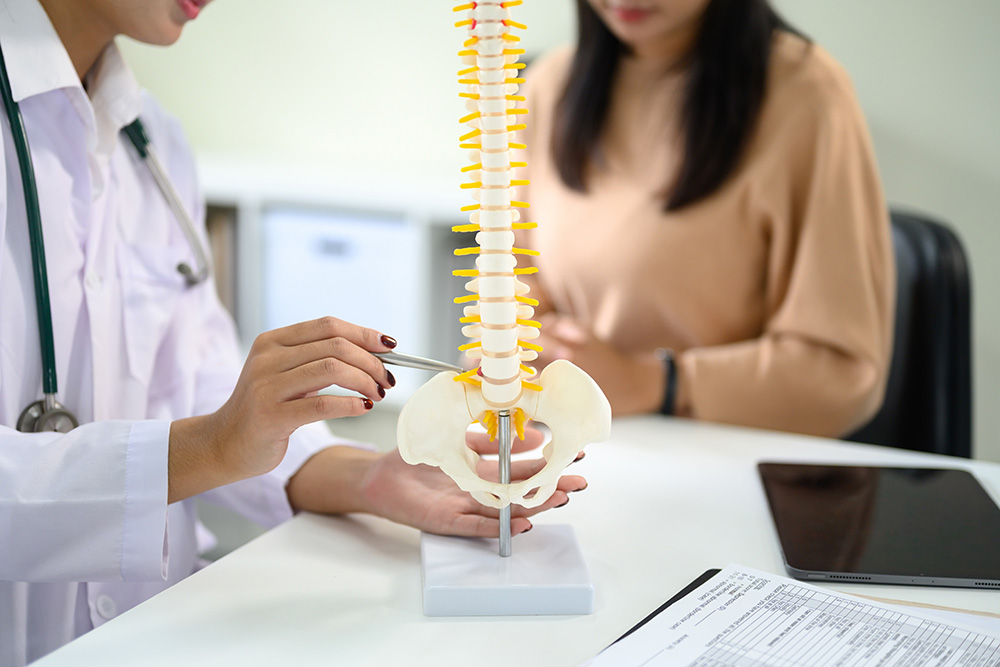
Conditions That Typically Accelerate or Worsen Spinal Stenosis
- Herniated discs
- Thickened or overgrown spinal ligaments
- Thickened or overgrown bony spinal elements
- Degenerative cysts that compress spinal nerves
Signs and Symptoms of Spinal Stenosis
- Leg heaviness, fatigue, or trouble walking distances
- Forward-flexed posture while walking
- Leaning on a shopping cart to get through the grocery store
- Numbness, tingling, or nerve pain in the arms and/or legs
- Balance issues
- Electrical shocks into the arms and/or legs
Diagnosis and Treatment
After discussing your symptoms, a physical examination will be conducted to determine the severity and root of the issue. Imaging tests — including X-rays, MRIs, or CTs — may also be ordered to pinpoint the exact location of stenosis and guide your treatment plan.
Treatment plans for severe symptoms may include:
- Physical therapy
- Steroid injections
- Massage therapy and acupuncture
- Chiropractic treatment
- Surgery (such as laminectomy, laminotomy, discectomy, laminoplasty, possible spinal fusion with instrumentation)
Make sure to consult with Midwest Orthopedic and Musculoskeletal Alliance for treatment options.
Spinal stenosis treatment in Southeastern Wisconsin
If you are experiencing symptoms of spinal stenosis, or have questions about your spine health, contact Midwest Orthopedic and Musculoskeletal Alliance today at 414-384-6700 to schedule an appointment.
Layton Avenue Ste 102 - Orthopedic Clinic
3033 W Layton Avenue, Suite 102
Greenfield, WI 53221
414-384-6700
Layton Avenue Ste 160 - Orthopedic Clinic
2500 W Layton Avenue, Suite 160
Milwaukee, WI 53221
414-384-6700
N. Mayfair Road - Orthopedic Clinic
3077 North Mayfair Road, Suite 100
Wauwatosa, WI 53222
414-384-6700
27th Street - Orthopedic Clinic
9969 S. 27th Street, Suite 1100
Franklin, WI 53132
414-384-6700
Rawson Avenue - Orthopedic Clinic
3111 W. Rawson Avenue, Suite 200/205
Franklin, WI 53132
414-384-6700
Rawson Avenue - Pain Management Clinic
3111 W Rawson Avenue, Suite 235
Franklin, WI 53132
414-260-5544
N Port Washington Road - Pain Management Clinic
12831 N Port Washington Road
Mequon, WI 53092
414-260-5544
Washington Avenue - Pain Management Clinic
10180 Washington Avenue
Mount Pleasant, WI 53177
414-260-5544
Rawson Avenue - SmartScan Medical Imaging Center
3111 W. Rawson Avenue, Suite 105
Franklin, WI 53132
855-694-3300
Ballpark Drive - OrthoLazer Center
7044 South Ballpark Drive, Suite 202
Franklin, WI 53132
414-448-7001
Bluemound Road - OrthoLazer Center
17550 West Bluemound Road
Brookfield, WI 53045
262-289-9455
MOSH Brookfield Walk-In Clinic
17000L W. Bluemound Rd.
Brookfield, WI 53005
414-817-6750
MOSH Franklin Ortho Walk-In Clinic
7095 S. Ballpark Dr. Suite 100
Franklin, WI 53132
414-817-6620