

Hip Replacement Surgery
Considering a hip replacement?
If you are considering a hip replacement, chances are you have dealt with chronic pain for a while. The decision to have a total hip replacement is one you make after talking with your primary care doctor, your family, and Midwest Orthopedic and Musculoskeletal Alliance.
A hip replacement can give you a great deal of relief, but it is important to have the right expectations.
Why hip replacement?
The decision to get a hip replacement is primarily based on your quality of life. If your hip pain is getting in the way of your everyday activities, it may be time for surgery.
Many choose to have a hip replacement surgery due to:
- Hip pain that limits common activities, such as walking or bending
- Hip pain that continues while resting, either day or night
- Stiffness in a hip that limits the ability to move or lift the leg
- Inadequate pain relief from anti-inflammatory drugs, physical therapy, or walking supports

Am I a candidate for hip replacement?
Those who choose to undergo a hip replacement are a variety of ages and backgrounds. There are no age or weight restrictions, but most are somewhere between 50 and 80 years old.
You may be recommended for surgery based on your pain, disability, and desired outcome. We will work with you to discuss a plan toward hip replacement surgery.
What can I expect?
If you are a candidate for a hip replacement, you can expect a thorough evaluation by Midwest Orthopedic and Musculoskeletal Alliance. You may undergo a series of tests, scans, or other exams to get a better look at your bones and the surrounding tissue.
As you talk with Midwest Orthopedic and Musculoskeletal Alliance, you can discuss potential risks, how to prepare, and also the type of hip replacement surgery you prefer. There are a number of location sites to access this part of the body, which can be determined between you and your Midwest Orthopedic and Musculoskeletal Alliance.
Types of Hip Replacements
As you discuss your plan with your Midwest Orthopedic and Musculoskeletal Alliance, you will be evaluated for a partial hip replacement or a total hip replacement, depending on the severity of your condition.
Partial Hip Replacement
A partial hip replacement is generally less invasive than a total hip replacement. What you can expect:
- The ball of your hip joint is replaced, but not the socket
- The artificial part is made of metal, ceramic, or plastic
- Done to repair certain types of hip fractures
- Inherently more stable, because the balls are larger they are less prone to dislocation
- Typically for patients with normal wear and tear
Total Hip Replacement
What you can expect:
- Both the ball and socket in the hip are replaced
- May require more surgical and healing time
- Impacts the body a lot more than a partial hip replacement
- May give you the best results for consistent pain relief
- Typically for patients having damage from diseases such as rheumatoid arthritis or an injury
How can I prepare for surgery?
Before surgery, you will want to prepare your home or environment so you can have a smooth transition coming home. This will allow for common activities like bathing, to still be done while you are recovering. You may want to set up items you often need in a central location, as it may be hard to move around immediately following a hip replacement.
You may need assistance at home for a short period following the surgery, as your range of motion may be limited. The surgery usually takes a couple of hours and you will likely need to be monitored for a short while following the procedure.
What happens during the procedure?
Both types of hip surgery last anywhere from one to three hours.
As you arrive for your procedure, you will be admitted to the surgery center. You will receive anesthesia, so you can feel comfortable and at ease during the hip replacement. There are several options for anesthesia based on your preference.
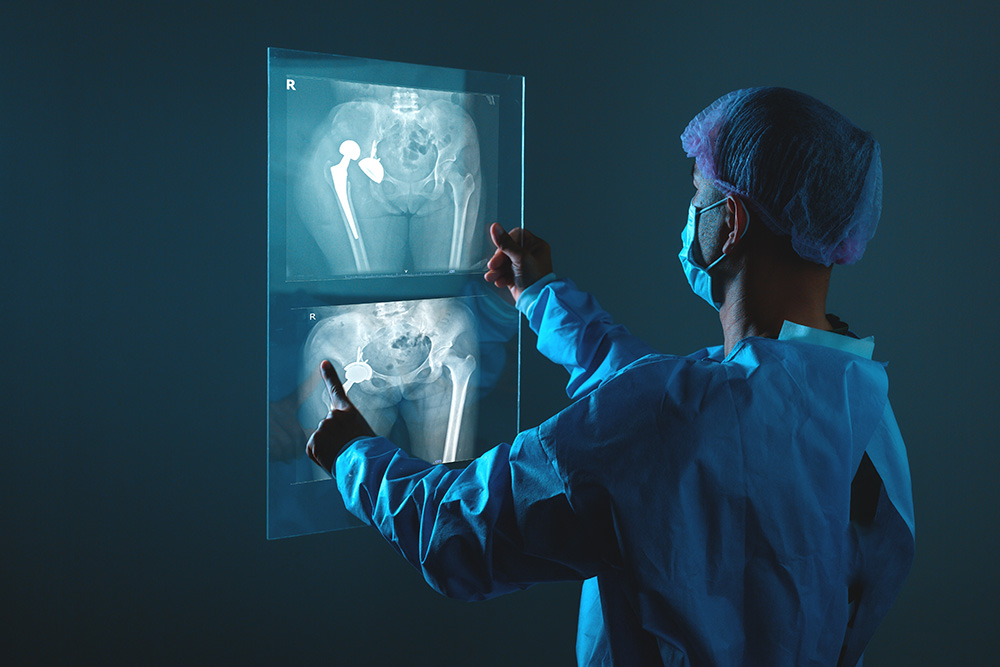
After the anesthesia, the surgeon will make a small incision and remove the damaged sections of the hip joint. These areas are replaced with metal, ceramic, or very hard plastic parts to help form the joint. This will help reduce pain and improve function.
After the procedure, you will need to monitor for blood clots, risks, or other limitations. Your surgeon will encourage you to walk around and stay moving as much as possible. Your care team may also suggest physical therapy to help restore range of motion and help you with your everyday responsibilities.
Positive Outcomes
Following your hip replacement, you can expect a great deal of relief. Many patients report positive outcomes in the months following a hip replacement and even more so after the first year.
Although you may be free from chronic pain, you may still be limited to low-impact activities after a hip replacement to avoid unnecessary stress on the artificial joint.
Schedule Your Hip Replacement Consultation Today
If hip pain is limiting your quality of life, call 414-384-6700 to schedule a consultation with our orthopedic specialists at Midwest Orthopedic and Musculoskeletal Alliance in Southeastern Wisconsin. We’ll help you understand your options and create a personalized plan to get you moving comfortably again.
Layton Avenue Ste 102 - Orthopedic Clinic
3033 W Layton Avenue, Suite 102
Greenfield, WI 53221
414-384-6700
Layton Avenue Ste 160 - Orthopedic Clinic
2500 W Layton Avenue, Suite 160
Milwaukee, WI 53221
414-384-6700
N. Mayfair Road - Orthopedic Clinic
3077 North Mayfair Road, Suite 100
Wauwatosa, WI 53222
414-384-6700
27th Street - Orthopedic Clinic
9969 S. 27th Street, Suite 1100
Franklin, WI 53132
414-384-6700
Rawson Avenue - Orthopedic Clinic
3111 W. Rawson Avenue, Suite 200/205
Franklin, WI 53132
414-384-6700
Rawson Avenue - Pain Management Clinic
3111 W Rawson Avenue, Suite 235
Franklin, WI 53132
414-260-5544
N Port Washington Road - Pain Management Clinic
12831 N Port Washington Road
Mequon, WI 53092
414-260-5544
Washington Avenue - Pain Management Clinic
10180 Washington Avenue
Mount Pleasant, WI 53177
414-260-5544
Rawson Avenue - SmartScan Medical Imaging Center
3111 W. Rawson Avenue, Suite 105
Franklin, WI 53132
855-694-3300
Ballpark Drive - OrthoLazer Center
7044 South Ballpark Drive, Suite 202
Franklin, WI 53132
414-448-7001
Bluemound Road - OrthoLazer Center
17550 West Bluemound Road
Brookfield, WI 53045
262-289-9455
MOSH Brookfield Walk-In Clinic
17000L W. Bluemound Rd.
Brookfield, WI 53005
414-817-6750
MOSH Franklin Ortho Walk-In Clinic
7095 S. Ballpark Dr. Suite 100
Franklin, WI 53132
414-817-6620