

Hip Replacement Rehabilitation
Whether your hip joint replacement is done as an open surgical procedure or minimally invasive hip arthroscopy, hip surgery rehab will be required. Typically, hip surgery rehab goes much more quickly following arthroscopy.
In either case, rehabilitation is designed to rebuild muscle and restore range of motion to get you back to a normal level of activity and mobility as quickly as possible.
Time Is of the Essence
Hip surgery rehab begins almost immediately. It is highly likely you will be getting out of bed (with assistance) the day after your hip replacement surgery. That’s because there is a small window of opportunity after surgery — usually a few weeks, although it varies from person to person — in which you have to restore the range of motion in your new hip or face stiffness and reduced range of motion.
Starting Hip Surgery Rehab
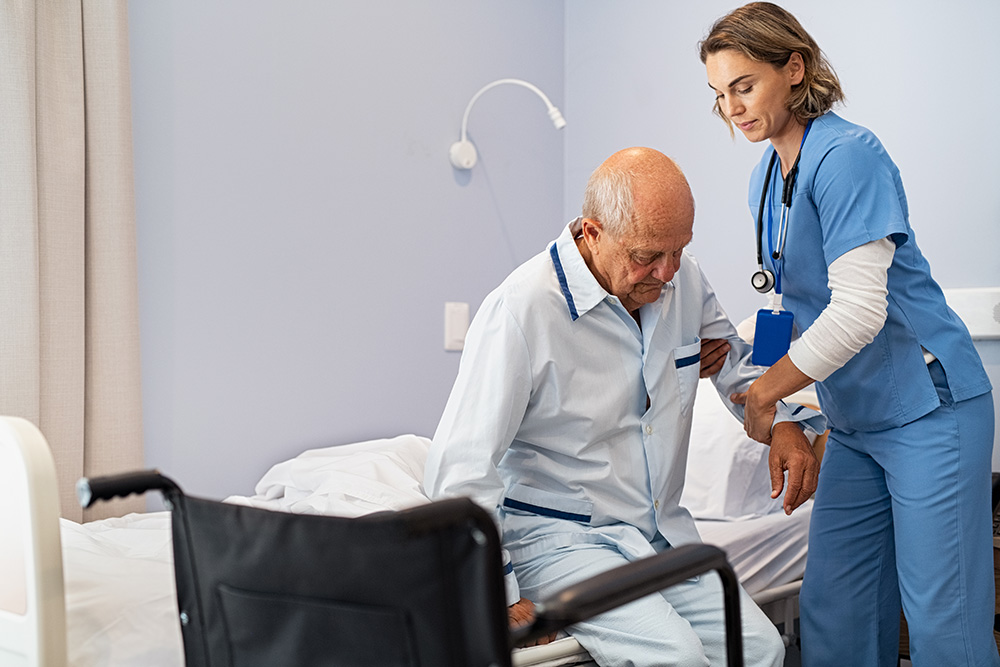
Your first hip surgery rehab session typically happens the day after surgery, while you’re still in the hospital. Your therapist will help you up and encourage you to walk with your new joint. The type of surgery you’ve had will determine how much weight you can put on your hip.
Your rehabilitation may include exercises you can do in bed every hour to avoid blood clots, such as tightening your thighs, squeezing your buttocks or pointing your feet up and down.
Long-Term Hip Surgery Rehab
After surgery, you’ll want to get home and experience your new hip without the old hip arthritis pain. This is when you begin another phase of rehabilitation. Throughout this extended phase of rehab, you’ll learn how to get in and out of your car and the bathtub without bending greater than 90 degrees at the hip. You will also learn new ways to do ordinary things like tie your shoes.
Your physical therapist can suggest devices to help you, such as a shower seat, a raised toilet seat and a long-handled shoehorn.
Managing Pain
It’s natural to feel some degree of pain and stiffness after hip replacement surgery. An important aspect of rehab is using therapies that diminish the pain to allow you to walk and exercise. Your physical therapist might also recommend exercising in a pool to build strength and flexibility without the pain of putting a lot of weight on your hip.
Hip Rehabilitation After Surgery
Hip replacement surgery is a very complex procedure. However, the outcomes following hip replacement are usually very successful. One of the important critical success factors for a successful outcome is following the physical rehabilitation process. In order to help achieve the goals for a successful total hip replacement, you must actively participate in the rehab process and work diligently on your own, as well as the physical therapists, to achieve optimal results.

Early Rehabilitation
Your recovery program usually begins the day after surgery. The rehabilitation team will work together to provide the care and encouragement needed during the first few days after surgery.
You may be given a device called an incentive spirometer that you inhale and exhale into. It measures your lung capacity and assists you in taking deep breaths. These exercises reduce the collection of fluid in the lungs after surgery, preventing the risk of pneumonia. Coughing is an effective tool for loosening any congestion that may build in the lungs following surgery.
The physical therapist will begin as early as 1-2 days after surgery. They will teach you some simple exercises to be done in bed that will strengthen the muscles in the hip and lower extremity. These exercises may include:
- Gluteal sets: Tighten and relax the buttock muscles.
- Quadriceps sets: Tighten and relax the thigh muscles.
- Ankle pumps: Flex and extend the ankles.
Your physical therapist will also teach you proper techniques to perform such simple tasks as:
- Moving up and down in bed.
- Going from lying to sitting.
- Going from sitting to standing.
- Going from standing to sitting.
- Going from sitting to lying.
Although these are simple activities, you must learn to do them safely so that the hip does not dislocate or suffer other injury.
Another important goal for early physical therapy is for you to learn to walk safely with an appropriate assistive device (usually a walker or crutches). Your surgeon will determine how much weight you can bear on your new hip, and your therapist will teach you the proper techniques for walking on level surfaces and stairs with the assistive device. Improper use of the assistive device raises the chance for accident or injury.
The occupational therapist will also visit with you to teach you how to perform activities of daily living safely. They will provide you with a list of hip precautions which are designed to protect your new hip during the first 8-12 weeks following surgery.
Precautions
- Do not bend forward to reach your feet. You must maintain a 90-degree angle between your torso and legs.
- Do not lift your knee higher than your hip on the operated side.
- Do not cross your legs.
- Do not allow your legs to internally rotate (feet turned in).
- Do not twist while lying or standing.
- Sleep on your back with a pillow between your knees to prevent crossing.
- Strictly observe your weight bearing precautions during standing or walking.
Also, the occupational therapist will instruct you in the proper use of various long-handled devices for activities of daily living. These devices may include the following:
- A reacher to dress and pick things up from the floor.
- A sock-aid that will assist in putting on socks.
- A long-handled sponge to wash your legs and feet.
- A leg-lifting device to move the operated leg in and out of the car or bed.
- An elevated toilet seat so that you don’t violate your hip precautions when using the bathroom.
- An elevated bathtub chair to fit in the shower or tub.
The precautions following a total hip replacement must be strictly adhered to in order to prevent dislocation of the hip implant and the possibility of re-operation.
At Home
Following surgery, a physical therapist may help you with your rehabilitation protocol. In addition to the exercises done with the therapist, you should continue to work on the hip exercises in your free time. It is also important to continue to walk on a regular basis to further strengthen your hip muscles. An exercise and walking program helps to enhance your recovery from surgery and helps make activities of daily living easier to manage.
Here is a list of potential exercises that you may be asked to perform. If an exercise is causing pain that is lasting, reduce the number of repetitions. If the pain continues, contact your physical therapist or physician.
- Ankle pumps
- Quadriceps sets
- Gluteal sets
- Heel slides
- Leg lifts
- Knee extension
- Hip abduction
While at home, you will continue to walk with the assistive device unless directed by your surgeon to discontinue use. You must also remember to strictly follow the hip precautions and weight bearing instructions during the first few months following surgery. It is recommended that you not drive unless you have been approved by your doctor.
Long-Term Rehabilitation Goals
Once you have completed your rehabilitation program, you can expect to be able to perform most activities of daily living with little to no pain or assistance. Patients following total hip replacement routinely are able to walk, dress, bathe, drive, garden, cook, and return to work. Although final outcomes may vary from patient to patient, total hip replacement surgery is one of the most successful procedures in modern medicine and most patients return to a full and active life.

Start Your Hip Replacement Rehabilitation Journey
If you have questions about what to expect after hip replacement surgery or would like to schedule a consultation, contact Midwest Orthopedic and Musculoskeletal Alliance today at 414-384-6700. Our team in Southeastern Wisconsin is here to guide you through every step of your recovery.
Layton Avenue Ste 102 - Orthopedic Clinic
3033 W Layton Avenue, Suite 102
Greenfield, WI 53221
414-384-6700
Layton Avenue Ste 160 - Orthopedic Clinic
2500 W Layton Avenue, Suite 160
Milwaukee, WI 53221
414-384-6700
N. Mayfair Road - Orthopedic Clinic
3077 North Mayfair Road, Suite 100
Wauwatosa, WI 53222
414-384-6700
27th Street - Orthopedic Clinic
9969 S. 27th Street, Suite 1100
Franklin, WI 53132
414-384-6700
Rawson Avenue - Orthopedic Clinic
3111 W. Rawson Avenue, Suite 200/205
Franklin, WI 53132
414-384-6700
Rawson Avenue - Pain Management Clinic
3111 W Rawson Avenue, Suite 235
Franklin, WI 53132
414-260-5544
N Port Washington Road - Pain Management Clinic
12831 N Port Washington Road
Mequon, WI 53092
414-260-5544
Washington Avenue - Pain Management Clinic
10180 Washington Avenue
Mount Pleasant, WI 53177
414-260-5544
Rawson Avenue - SmartScan Medical Imaging Center
3111 W. Rawson Avenue, Suite 105
Franklin, WI 53132
855-694-3300
Ballpark Drive - OrthoLazer Center
7044 South Ballpark Drive, Suite 202
Franklin, WI 53132
414-448-7001
Bluemound Road - OrthoLazer Center
17550 West Bluemound Road
Brookfield, WI 53045
262-289-9455
MOSH Brookfield Walk-In Clinic
17000L W. Bluemound Rd.
Brookfield, WI 53005
414-817-6750
MOSH Franklin Ortho Walk-In Clinic
7095 S. Ballpark Dr. Suite 100
Franklin, WI 53132
414-817-6620