

Knee
When knee pain makes it hard for you to walk, run or enjoy sports, turn to the skilled knee specialists at Midwest Orthopedic and Musculoskeletal Alliance.
You’ll get top-quality care from physicians who have successfully treated thousands of major and minor knee problems, including the severe sports injuries of professional athletes. With decades of experience in caring for knees, we thoroughly understand how to treat your condition — and get you back to your favorite activities.
Our Main Knee Services at Midwest Orthopedic and Musculoskeletal Alliance
Rely on Midwest Orthopedic and Musculoskeletal Alliance when you need treatment for knee problems. Our specialists diagnose and treat the full range of knee conditions and injuries, creating a personalized plan to get you back to the activities you enjoy.


Other Knee Conditions We Treat
PCL Injuries
The posterior cruciate ligament (PCL) sits at the back of the knee and keeps the shinbone from sliding too far backward. PCL injuries are less common than ACL tears and often result from a direct blow to the front of a bent knee, such as in a car accident or contact sport. Many respond well to physical therapy and bracing, though more severe tears may require surgical reconstruction.
LCL/PLC Injuries
The lateral collateral ligament (LCL) and posterolateral corner (PLC) stabilize the outer side of the knee and help control rotation. Injuries here often occur alongside other ligament damage and can cause instability, outer-knee pain, and difficulty pivoting. Treatment ranges from bracing and rehabilitation for mild sprains to surgical repair or reconstruction for complete or combined injuries.
Patellar Tendonitis
Patellar tendonitis, often called jumper’s knee, is inflammation of the tendon that connects the kneecap to the shinbone. It typically causes pain just below the kneecap that worsens with running, jumping, or climbing stairs, and is common among active individuals and athletes. Most cases respond to rest, physical therapy, and activity modification, with additional treatments considered for persistent symptoms.
Bursitis
Knee bursitis is inflammation of a bursa, one of the small fluid-filled sacs that cushion the bones, tendons, and muscles around the knee. It commonly causes pain, swelling, and tenderness — often over the kneecap or along the inner knee — that may worsen with kneeling or repetitive activity. Most cases improve with rest, ice, and anti-inflammatory measures, though persistent bursitis may require aspiration or an injection.
Baker's Cyst
A Baker’s cyst is a fluid-filled swelling that forms behind the knee, often as a result of arthritis or a meniscus tear that causes the joint to produce excess fluid. It can create a feeling of tightness or a visible bulge behind the knee, along with stiffness when bending. Treatment focuses on the underlying cause, while the cyst itself may be managed with injections, drainage, or activity modification.
Cartilage Defects
Articular cartilage cushions the ends of the bones in the knee, and damage to it from injury or wear can cause pain, swelling, and catching with movement. Because cartilage has a limited ability to heal on its own, untreated defects may progress to arthritis over time. Our specialists offer options ranging from activity modification and injections to cartilage restoration procedures, tailored to the size and location of the defect.
Malalignment
Knee malalignment occurs when the leg’s natural axis shifts inward (knock-knee) or outward (bow-leg), placing uneven stress across the joint. Over time this imbalance can accelerate cartilage wear and contribute to pain and early arthritis. Treatment may include bracing, physical therapy, or a realignment osteotomy to redistribute weight and protect the healthier part of the knee.
Fractures
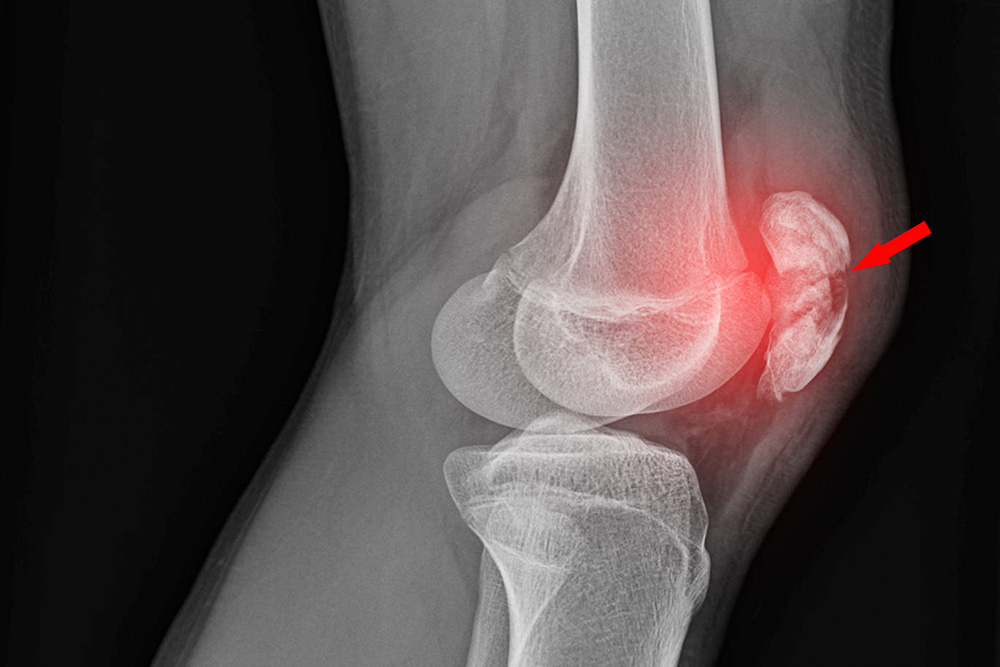
Fractures around the knee — including the kneecap (patella), the lower thighbone, and the upper shinbone (tibial plateau) — can result from falls, sports, or high-impact trauma. Symptoms typically include severe pain, swelling, and difficulty bearing weight or straightening the leg. Treatment depends on the fracture’s location and severity and may involve immobilization or surgical fixation to restore the joint surface and stability.
Biologics
Biologic treatments use the body’s own healing properties — including platelet-rich plasma (PRP) and stem cell therapy — to reduce inflammation and support tissue repair in the knee. These minimally invasive options may be used for conditions such as arthritis, tendon injuries, and cartilage damage, either on their own or alongside traditional care. Our specialists will help determine whether biologic therapy is appropriate for your condition and goals.
Joint Restoration
Joint restoration focuses on preserving and repairing the knee’s natural structures rather than replacing the joint, helping active patients delay or avoid replacement surgery. These procedures may address damaged cartilage, ligaments, or meniscus using advanced, minimally invasive techniques. Our specialists create an individualized plan aimed at relieving pain while protecting as much of your natural joint as possible.
Prevent Knee Pain
- Allowing your knee to fully recover from an injury before you resume strenuous activities
- Following proper form as you exercise
- Maintaining a healthy weight
- Stretching your calves, hamstrings and quadriceps regularly
- Wearing shoes that fit well and support your arches
Total Knee Replacement
As our population ages but stays active and healthier, hip and knee pain from joint deterioration is expected to increase. When this occurs, simple exercise, activities of daily living or attempting to lose weight becomes painful.
Midwest Orthopedic and Musculoskeletal Alliance physicians are committed to providing a full spectrum approach to treatment of all joint conditions. These conditions include Avascular Necrosis, Osteoarthritis, Rheumatoid Arthritis and post-traumatic arthritis whether from a sports injury or a previous fracture.
We offer non-operative care including bracing, therapy, and multiple types of injections. Unfortunately there are times when non-operative treatment does not provide the desired results.
When non-operative treatments do not provide the desired results joint replacement is an excellent option. Although no surgery is risk-free, our surgeons will individualize a treatment plan best for each patient.
After a thorough workup including history, physical exam, X-ray and possibly a CT scan or MRI evaluation, a surgical plan will be devised with the needs of the patient.
We offer total knee, partial knee including unicompartmental and patella-femoral replacement.
Frequently Asked Questions
How does a total knee replacement work?
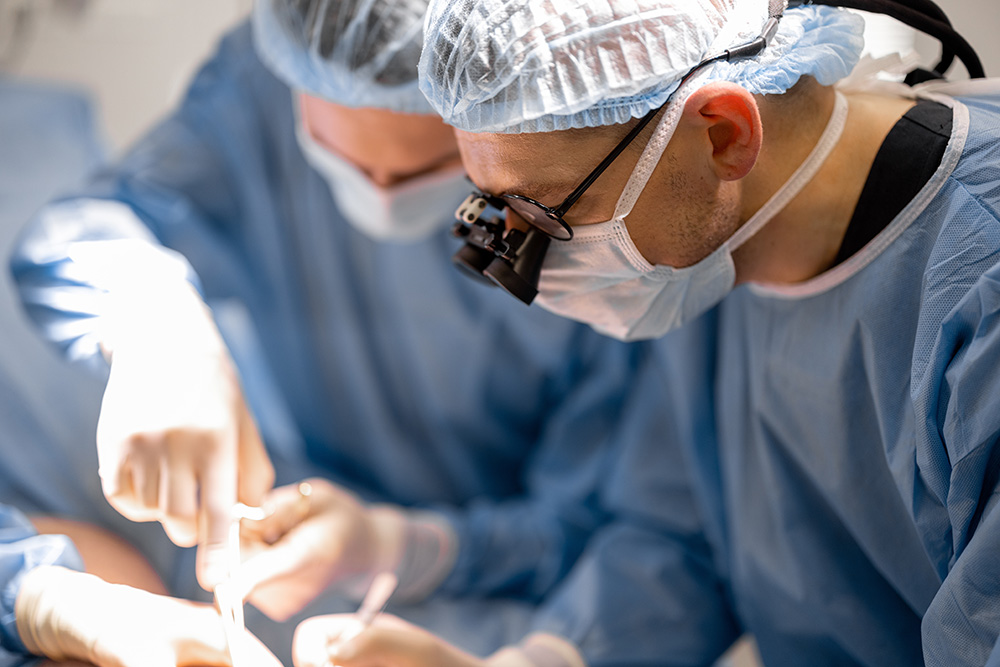
The surgeon makes an incision to access the affected knee. Through careful precise surgical technique the damaged cartilage is removed. The new implant is fixed in place usually by bone cement. The implant is matched to each patient based on size and other individual physical measurements. The implant is made up of metal alloys such as cobalt-chrome. There are nickel free options for our patients who have metal allergies. In between the metal components a high grade plastic designed to have minimal friction, but last for several years is placed to allow the joint bend and straighten.
What is done prior to surgery?
After the decision is made to schedule a total knee replacement by you and your physician usually a medical workup performed by your primary care physician is ordered. This assures that our patients are medically safe to undergo the surgical procedure.
A total joint replacement class is scheduled to introduce our patients to the hospital, the staff who will be taking care of you and allow for further questions of what to expect.
How long is the hospital stay?
As technology has improved hospitalization stays have lessened. We offer outpatient, 23 hour and traditional inpatient total knee replacement. You will have physical and occupation therapy prior to discharge to assure you are safe enough to go home.
What to expect after surgery?
After surgery several in-office visits are scheduled to make sure you are progressing appropriately. Usually physical therapy is ordered. Also, to prevent blood clots from forming you will be prescribed medication to take for 4-6 weeks.
Some surgeons will send home machines called CPMs to help with motion of the knee and pain control.
Midwest Orthopedic and Musculoskeletal Alliance has several physicians who perform cutting edge total joint replacements. Please call our office to schedule an appointment to undergo an evaluation.
Schedule Your Knee Consultation Today
If you are experiencing knee pain or have been told you may need knee surgery, contact Midwest Orthopedic and Musculoskeletal Alliance today at 414-384-6700. Our orthopedic knee specialists in Southeastern Wisconsin will evaluate your condition and recommend the most appropriate treatment plan.
Layton Avenue Ste 102 - Orthopedic Clinic
3033 W Layton Avenue, Suite 102
Greenfield, WI 53221
414-384-6700
Layton Avenue Ste 160 - Orthopedic Clinic
2500 W Layton Avenue, Suite 160
Milwaukee, WI 53221
414-384-6700
N. Mayfair Road - Orthopedic Clinic
3077 North Mayfair Road, Suite 100
Wauwatosa, WI 53222
414-384-6700
27th Street - Orthopedic Clinic
9969 S. 27th Street, Suite 1100
Franklin, WI 53132
414-384-6700
Rawson Avenue - Orthopedic Clinic
3111 W. Rawson Avenue, Suite 200/205
Franklin, WI 53132
414-384-6700
Rawson Avenue - Pain Management Clinic
3111 W Rawson Avenue, Suite 235
Franklin, WI 53132
414-260-5544
N Port Washington Road - Pain Management Clinic
12831 N Port Washington Road
Mequon, WI 53092
414-260-5544
Washington Avenue - Pain Management Clinic
10180 Washington Avenue
Mount Pleasant, WI 53177
414-260-5544
Rawson Avenue - SmartScan Medical Imaging Center
3111 W. Rawson Avenue, Suite 105
Franklin, WI 53132
855-694-3300
Ballpark Drive - OrthoLazer Center
7044 South Ballpark Drive, Suite 202
Franklin, WI 53132
414-448-7001
Bluemound Road - OrthoLazer Center
17550 West Bluemound Road
Brookfield, WI 53045
262-289-9455
MOSH Brookfield Walk-In Clinic
17000L W. Bluemound Rd.
Brookfield, WI 53005
414-817-6750
MOSH Franklin Ortho Walk-In Clinic
7095 S. Ballpark Dr. Suite 100
Franklin, WI 53132
414-817-6620