

Birmingham Hip Resurfacing
A Conservative Alternative to Total Hip Replacement
An exciting new alternative to total hip replacement is now available in the United States. Used successfully for years around the globe, the Birmingham Hip Resurfacing System has recently been approved by the Food and Drug Administration for use in the United States. Now, patients suffering from hip pain due to arthritis, dysplasia or avascular necrosis can benefit from its conservative approach to treatment.
Because this technologically advanced surgical procedure resurfaces rather than replaces the end of your femur (thighbone), you may participate in more strenuous physical activity with an implant that is potentially more stable and longer-lasting than traditional total hip replacements. And if future revision surgery is required, it may be a less complex and less traumatic procedure.
In fact, a 1,626-hip study of the effectiveness of the technique found that 99.5 percent of patients responded they were “Pleased” or “Extremely pleased” with the results of their Birmingham Hip Resurfacing surgery.
Who is a candidate for hip resurfacing?
Hip resurfacing is intended for young, active adults who are under 60 years of age and in need of a hip replacement. Adults over 60 who are living non-sedentary lifestyles may also be considered for this procedure. However, this can only be further determined by a review of your bone quality.
There are certain causes of hip arthritis that result in extreme deformity of either the head of the femur or the acetabulum (hip socket). These cases are usually not candidates for hip resurfacing.
Talk with your orthopedic surgeon to determine if hip resurfacing is the right option for you.

Diseases of the Hip
There are four primary diseases of the hip that may indicate the need for Birmingham Hip Resurfacing.
Osteoarthritis
A degenerative “wear-and-tear” condition that causes cartilage in the hip joint to break down, leading to pain, stiffness, reduced mobility, and bone spurs. It most commonly affects adults over 50 but can occur at any age, especially after injury or due to genetic factors.
Rheumatoid Arthritis
A chronic autoimmune disease that causes inflammation of the joints, leading to pain, swelling, stiffness, and loss of function. It often affects multiple joints and may also cause fatigue, fever, anemia, and periodic flare-ups.
Developmental Dysplasia of the Hip (DDH)
A condition present at birth in which the hip joint develops abnormally. Over time, the altered anatomy can lead to premature arthritis and joint wear. Risk factors include family history, female sex, first-born status, and breech birth.
Avascular Necrosis (AVN)
A condition caused by reduced blood flow to the hip bone, leading to bone death and eventual joint collapse. Common causes include long-term corticosteroid use and excessive alcohol consumption. Symptoms typically include hip pain that worsens with standing or walking.
Non-Surgical Alternatives to Hip Resurfacing
Before deciding on hip resurfacing, your physician may try several non-surgical, conservative measures to relieve the pain and inflammation in your hip.
Lifestyle Modifications
Weight loss, activity changes, and using a cane can help reduce stress on the hip joint and relieve pain.
Exercise & Physical Therapy
Strengthening, flexibility exercises, stationary biking, and aquatic therapy can improve mobility, reduce pain, and support joint function.
Anti-Inflammatory Medications
NSAIDs and COX-2 inhibitors may help reduce inflammation and manage arthritis pain. In some cases, corticosteroids may be prescribed when other medications are ineffective.
Glucosamine & Chondroitin
These dietary supplements may help reduce arthritis symptoms in some patients, although research on their effectiveness is ongoing.
When Surgery Becomes an Option
If conservative treatments no longer provide adequate relief, surgical options such as hip resurfacing or total hip replacement may be recommended to reduce pain and restore function.
The Procedure
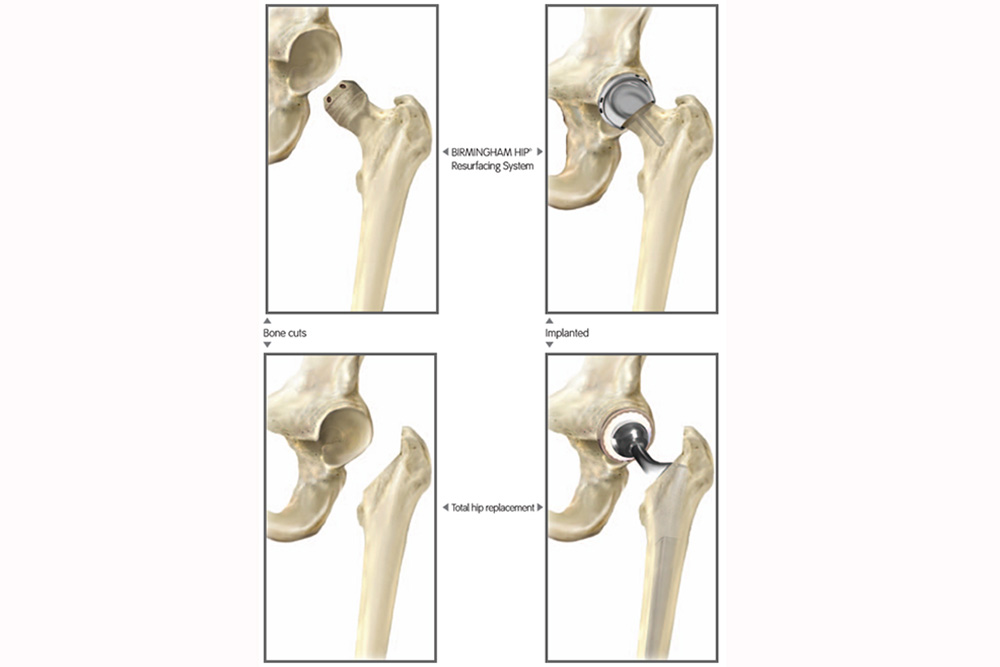
Hip resurfacing is a bone-conserving alternative to total hip replacement for patients with advanced hip arthritis. Unlike a traditional hip replacement, which involves removing the femoral head and inserting a stem into the femur, hip resurfacing preserves most of the patient’s natural bone structure.
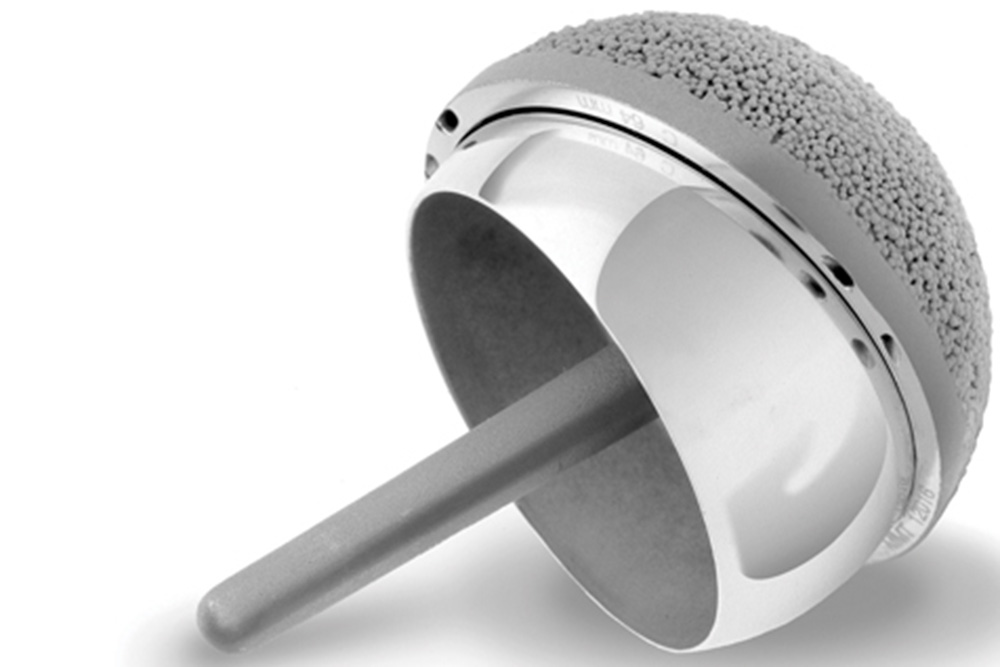
During the procedure, the surgeon carefully reshapes the damaged femoral head, removing only a small amount of bone, and fits it with the Birmingham Hip Resurfacing implant, a smooth metal cap designed to restore the joint surface. The hip socket (acetabulum) is also prepared by removing damaged cartilage and bone before a metal cup is securely placed into position. Together, these components create a new ball-and-socket joint that helps reduce pain, improve mobility, and restore function while preserving more of the patient’s natural hip anatomy.
The Implant
The Birmingham Hip Resurfacing implant is not brand new. It has been in use around the world since 1997 and has since been implanted more than 60,000 times. It is new to the United States, however, where it was approved for use by the Food and Drug Administration in May 2006.
Although hip resurfacing is not a new concept, the technology behind the ground-breaking Birmingham Hip was developed by British orthopedic surgeons Mr. Derek McMinn and Mr. Ronan Treacy. The two surgeons now train orthopedists from around the globe on behalf of London-based medical device manufacturer Smith & Nephew. US surgeons given access to this implant may travel to England for specialized training or may train at one of the few US centers capable of hosting these focused sessions.
Patient Benefits
The Birmingham Hip Resurfacing implant offers several advantages for active patients seeking an alternative to total hip replacement. Its larger femoral head size, advanced metal-on-metal bearing surfaces, and bone-conserving design help improve joint stability, reduce wear, and preserve more of the patient’s natural anatomy.
Greater Stability
Because the implant closely matches the size of the natural femoral head, it provides greater joint stability and a lower risk of dislocation compared to traditional total hip replacement implants.
Advanced Bearing Surfaces
The Birmingham Hip Resurfacing system uses highly polished cobalt-chrome components for both the ball and socket. This metal-on-metal design significantly reduces wear particles compared to traditional metal-and-plastic implants, which may help extend the life of the implant.
Bone Preservation
One of the key advantages of the Birmingham Hip Resurfacing implant is its ability to preserve the femoral head and neck. By maintaining more natural bone, the procedure helps preserve normal leg length and anatomy. Additionally, if a future revision becomes necessary, patients may still be candidates for a standard total hip replacement, offering greater flexibility for long-term treatment options.
Hip Resurfacing: Pre-Op & Surgery Day
Preparing for hip resurfacing surgery involves several important steps before, during, and immediately after the procedure to help ensure a safe and successful outcome.
Before Surgery
Prior to surgery, you will meet with your orthopedic surgeon for a comprehensive evaluation that may include X-rays, a physical examination, a review of your medical history, and a discussion of medications and allergies. Your surgeon will explain the procedure, answer questions, and may require medical clearance from your primary care physician. In some cases, patients may be advised to donate blood in advance if a transfusion could be needed.
To prepare for your hospital stay, bring comfortable clothing, supportive footwear, any mobility aids you currently use, and your insurance information.
Preparing for the Procedure
Your surgeon will provide specific instructions to follow before surgery. These typically include avoiding food and drinks after midnight the night before surgery and temporarily stopping certain medications, such as aspirin or anti-inflammatory drugs, as directed. Getting adequate rest in the days leading up to surgery is also encouraged.
Day of Surgery
After arriving at the hospital, the care team will review your medical information, take your vital signs, start IV fluids, and prepare you for surgery. You will meet with the anesthesiologist to discuss the anesthesia plan and any final questions before being taken to the operating room.
Recovery After Surgery
Following the procedure, you will spend time in a recovery area where your vital signs, circulation, and comfort level will be closely monitored. Once stable, you will be transferred to your hospital room.
During the initial recovery period, you may have a surgical dressing, IV medications and fluids, temporary drainage tubes, compression devices to help prevent blood clots, and pain management medications. Your healthcare team will monitor your progress closely and begin guiding you through the early stages of rehabilitation and recovery.
Rehabilitation & Recovery After Hip Resurfacing
Successful recovery after hip resurfacing depends on following a structured rehabilitation program and actively participating in physical therapy. Consistent exercise, proper movement techniques, and adherence to your surgeon’s recommendations are essential for restoring strength, mobility, and function.
Early Rehabilitation
Rehabilitation typically begins within one to two days after surgery. During your hospital stay, your care team will help you regain mobility safely while reducing the risk of complications. You may perform breathing exercises to support lung function and begin simple movements designed to improve circulation and strengthen the muscles surrounding the hip.
Physical therapy focuses on gentle exercises such as ankle pumps, quadriceps sets, and gluteal sets, as well as learning safe techniques for getting in and out of bed, sitting, standing, and walking with an assistive device such as a walker or crutches.
Hip Precautions
During the first several weeks after surgery, you will need to follow specific precautions to protect your new hip and support healing. These may include avoiding excessive bending at the waist, crossing your legs, twisting movements, or placing excessive weight on the operated leg. Your therapy team may also recommend adaptive devices to make daily activities safer and more comfortable during recovery.
Recovery at Home
Once home, continuing your prescribed exercise and walking program is essential. Your rehabilitation plan may include exercises such as heel slides, leg lifts, knee extensions, and hip abduction movements to improve flexibility and strength. Walking regularly and following weight-bearing guidelines can help accelerate recovery and improve long-term outcomes.
Most patients continue using an assistive device until cleared by their surgeon and should avoid driving until receiving medical approval.
Life After Hip Resurfacing
As recovery progresses, many patients experience improved mobility, reduced pain, and a return to everyday activities. To protect the long-term success of the Birmingham Hip Resurfacing, it is important to follow your surgeon’s recommendations regarding activity levels and recovery milestones.
High-impact activities such as running and jumping are generally discouraged during the first year after surgery to allow the hip to heal properly. Maintaining a healthy weight, avoiding excessive stress on the joint, and taking precautions to prevent falls can help reduce the risk of complications and support the longevity of the implant.
While most patients achieve excellent outcomes, any persistent pain, swelling, or changes in function should be reported to your physician promptly for evaluation.
Preventing Hip Resurfacing Complications
While hip resurfacing is generally a safe and effective procedure, complications can occur following surgery. Understanding potential risks and following your care team’s instructions can help support a smooth recovery and reduce the likelihood of complications.
Blood Clots (Thromboembolism)
Blood clots can sometimes develop in the veins of the legs after surgery, a condition known as deep vein thrombosis (DVT). In rare cases, a clot can travel to the lungs, causing a pulmonary embolism, which requires immediate medical attention.
To help reduce this risk, your surgeon may recommend blood-thinning medications, compression stockings, pneumatic compression devices, leg elevation, and regular foot and ankle exercises to promote healthy circulation. Contact your physician immediately if you experience calf pain, swelling, redness, or tenderness.
Infection Prevention
Although infections are uncommon, they remain a potential risk after any surgical procedure. Carefully following wound care instructions and monitoring your incision site can help reduce this risk.
Signs of infection may include increasing redness, swelling, drainage, unusual tenderness, foul odor, persistent fever, or worsening pain around the surgical site. Good hand hygiene and proper incision care are important throughout the recovery process.
Pneumonia Prevention
Reduced activity after surgery can increase the risk of developing pneumonia. Deep breathing exercises, coughing exercises, and the use of an incentive spirometer can help keep the lungs clear and functioning properly during recovery.
Your healthcare team will provide instructions on how to perform these exercises and may recommend practicing them regularly throughout the day to support healthy lung function.
Following Your Recovery Plan
One of the most effective ways to prevent complications is to closely follow your surgeon’s post-operative instructions. Taking medications as prescribed, attending follow-up appointments, participating in physical therapy, and reporting any unusual symptoms promptly can help ensure a safe recovery and the long-term success of your Birmingham Hip Resurfacing implant.
Frequently Asked Questions
Since the Birmingham Hip Resurfacing implant is new in the United States, is it clinically proven?
While the Birmingham Hip Resurfacing implant is new to the United States, it is not a new implant or technique. It has been in use worldwide since 1997, and the US Food and Drug Administration reviewed a tremendous amount of resulting clinical data before approving it for use in this country.
Who is a candidate for the Birmingham Hip Resurfacing System?
The typical patient will be physically active, under 60 years of age, and suffering from hip arthritis, hip dysplasia or avascular necrosis of the hip. The implant can be used in patients over 60 whose bone quality is strong enough to support the implant. Your surgeon will make the determination if you are a candidate for hip resurfacing.
How long will the Birmingham Hip Resurfacing implant last?
It is impossible to say how long your implant will last because so many factors play into the lifespan of an implant. In the case of resurfacing, for instance, the metal-on-metal bearing surfaces of your new joint may extend its life longer than that of a traditional total hip replacement, but failure to comply with your physical rehabilitation regime may cause your implant to fail within months. A clinical study showed the Birmingham Hip Resurfacing implant had a survivorship of 98.4-percent at the five-year mark, which is comparable with the survivorship of a traditional total hip replacement in the under-60 age group.
How long will my scar be?
Your surgeon will use an incision of between six and eight inches in length. While some surgeons may use a slightly smaller incision, most will fall in that range.
What are my physical limitations after surgery?
Most surgeons will tell you that after the first year, you can return to whatever physical activity you enjoyed before hip pain limited your mobility. For instance, unlike total hip replacement, you will be able to return to jogging or singles tennis after your first year after surgery. During your first year, more conservative, low-impact activities like walking, swimming and bicycling are recommended for strengthening your femoral neck and the muscles around your resurfaced joint.
How can I receive more information about hip resurfacing and the Birmingham Hip implant?
Ask your surgeon for the Birmingham Hip Resurfacing system patient information, or visit BirminghamHipResurfacing.com.
Schedule a Birmingham Hip Resurfacing Consultation
To find out if the Birmingham Hip Resurfacing System is right for you, contact Midwest Orthopedic and Musculoskeletal Alliance today at 414-384-6700. Our orthopedic team in Southeastern Wisconsin is here to help.
Layton Avenue Ste 102 - Orthopedic Clinic
3033 W Layton Avenue, Suite 102
Greenfield, WI 53221
414-384-6700
Layton Avenue Ste 160 - Orthopedic Clinic
2500 W Layton Avenue, Suite 160
Milwaukee, WI 53221
414-384-6700
N. Mayfair Road - Orthopedic Clinic
3077 North Mayfair Road, Suite 100
Wauwatosa, WI 53222
414-384-6700
27th Street - Orthopedic Clinic
9969 S. 27th Street, Suite 1100
Franklin, WI 53132
414-384-6700
Rawson Avenue - Orthopedic Clinic
3111 W. Rawson Avenue, Suite 200/205
Franklin, WI 53132
414-384-6700
Rawson Avenue - Pain Management Clinic
3111 W Rawson Avenue, Suite 235
Franklin, WI 53132
414-260-5544
N Port Washington Road - Pain Management Clinic
12831 N Port Washington Road
Mequon, WI 53092
414-260-5544
Washington Avenue - Pain Management Clinic
10180 Washington Avenue
Mount Pleasant, WI 53177
414-260-5544
Rawson Avenue - SmartScan Medical Imaging Center
3111 W. Rawson Avenue, Suite 105
Franklin, WI 53132
855-694-3300
Ballpark Drive - OrthoLazer Center
7044 South Ballpark Drive, Suite 202
Franklin, WI 53132
414-448-7001
Bluemound Road - OrthoLazer Center
17550 West Bluemound Road
Brookfield, WI 53045
262-289-9455
MOSH Brookfield Walk-In Clinic
17000L W. Bluemound Rd.
Brookfield, WI 53005
414-817-6750
MOSH Franklin Ortho Walk-In Clinic
7095 S. Ballpark Dr. Suite 100
Franklin, WI 53132
414-817-6620