

Fractured Vertebrae
The vertebrae are the bones that make up the spine, and when subjected to excessive stress, can fracture just like any other bone.
Fractured vertebrae are the most serious of spinal injuries, occurring mostly in the lower and mid-back, and are most often caused by high-speed impacts such as car crashes or falling from a great height.
Fractured vertebrae are experienced more often by men than women, and are more common in the elderly due to bone weakening from conditions such as osteoporosis.
Fractured Vertebrae Causes
- Car crashes
- Falls from height
- Sports accidents
- Violent acts, such as a gunshot wound
Fractured Vertebrae Symptoms
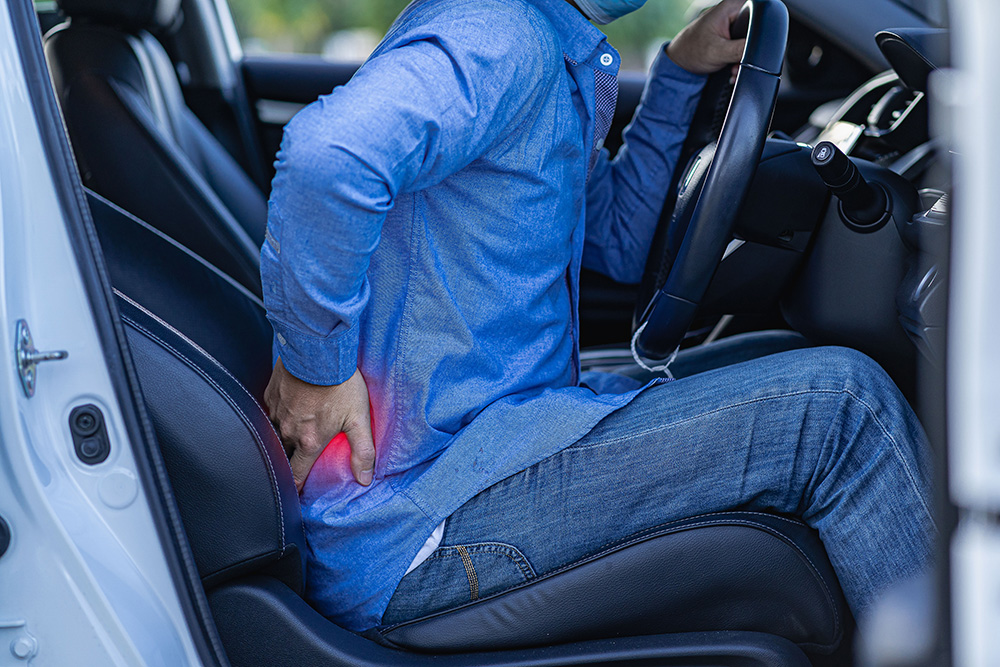
The primary symptom is moderate to severe back pain that is made worse by movement.
When the spinal cord is involved due to bone fragments pushing into the spinal canal, numbness, tingling, weakness, and/or bowel/bladder dysfunction may occur.
X-ray, MRI, and CT scans are often needed to accurately diagnose the extent of the fracture. In the case of a high-impact trauma, the patient may have a brain injury and may have lost consciousness.
Conservative Treatment
Treatment depends on the type of fracture and if other injuries were sustained. Most flexion vertebrae fractures (compression fractures, burst fractures) can be treated in a brace for six to twelve weeks.
By gradually increasing physical activity and doing rehabilitation exercises, most patients avoid post-injury problems.
Surgical Treatment
Spine surgery is typically required for unstable burst vertebrae fractures that have:
- Significant comminution (fracture fragments)
- Severe loss of vertebral body height
- Excessive forward bending or angulation at the injury site
- Significant spinal cord or nerve injury due to parts of the vertebral body or disc pinching the spinal cord
These fractures should be treated during surgery with decompression of the spinal canal and stabilization of the fracture. This type of surgery is also called a laminectomy, which uses metal implants to secure the fractured areas until they fuse together and heal.
Get expert care for fractured vertebrae
If you have sustained a spinal injury or are experiencing back pain following trauma, contact Midwest Orthopedic and Musculoskeletal Alliance today at 414-384-6700. Our team in Southeastern Wisconsin will evaluate your condition and recommend the most appropriate course of treatment.
Layton Avenue Ste 102 - Orthopedic Clinic
3033 W Layton Avenue, Suite 102
Greenfield, WI 53221
414-384-6700
Layton Avenue Ste 160 - Orthopedic Clinic
2500 W Layton Avenue, Suite 160
Milwaukee, WI 53221
414-384-6700
N. Mayfair Road - Orthopedic Clinic
3077 North Mayfair Road, Suite 100
Wauwatosa, WI 53222
414-384-6700
27th Street - Orthopedic Clinic
9969 S. 27th Street, Suite 1100
Franklin, WI 53132
414-384-6700
Rawson Avenue - Orthopedic Clinic
3111 W. Rawson Avenue, Suite 200/205
Franklin, WI 53132
414-384-6700
Rawson Avenue - Pain Management Clinic
3111 W Rawson Avenue, Suite 235
Franklin, WI 53132
414-260-5544
N Port Washington Road - Pain Management Clinic
12831 N Port Washington Road
Mequon, WI 53092
414-260-5544
Washington Avenue - Pain Management Clinic
10180 Washington Avenue
Mount Pleasant, WI 53177
414-260-5544
Rawson Avenue - SmartScan Medical Imaging Center
3111 W. Rawson Avenue, Suite 105
Franklin, WI 53132
855-694-3300
Ballpark Drive - OrthoLazer Center
7044 South Ballpark Drive, Suite 202
Franklin, WI 53132
414-448-7001
Bluemound Road - OrthoLazer Center
17550 West Bluemound Road
Brookfield, WI 53045
262-289-9455
MOSH Brookfield Walk-In Clinic
17000L W. Bluemound Rd.
Brookfield, WI 53005
414-817-6750
MOSH Franklin Ortho Walk-In Clinic
7095 S. Ballpark Dr. Suite 100
Franklin, WI 53132
414-817-6620