

Hip Fracture
Hip Fracture Treatment for Fast, Effective Recovery
A hip fracture is a serious injury involving a break in the upper portion of the thigh bone (femur) near the hip joint. Because these injuries often affect mobility and overall health, prompt diagnosis and treatment are essential to achieving your best possible outcome.
At Midwest Orthopedic and Musculoskeletal Alliance, our orthopedic specialists provide comprehensive, compassionate care for hip fractures — from emergency evaluation through surgical treatment and rehabilitation. If you sustain a hip fracture, we’re here to help you regain your strength, stability, and independence.
What is a hip fracture?
A hip fracture is a partial or complete break in the proximal femur, where the thigh bone meets the hip joint.
These injuries are most commonly caused by falls in older adults, though they can also result from high-impact trauma in younger individuals.
Hip fractures are considered a medical emergency and typically require surgical treatment followed by rehabilitation.
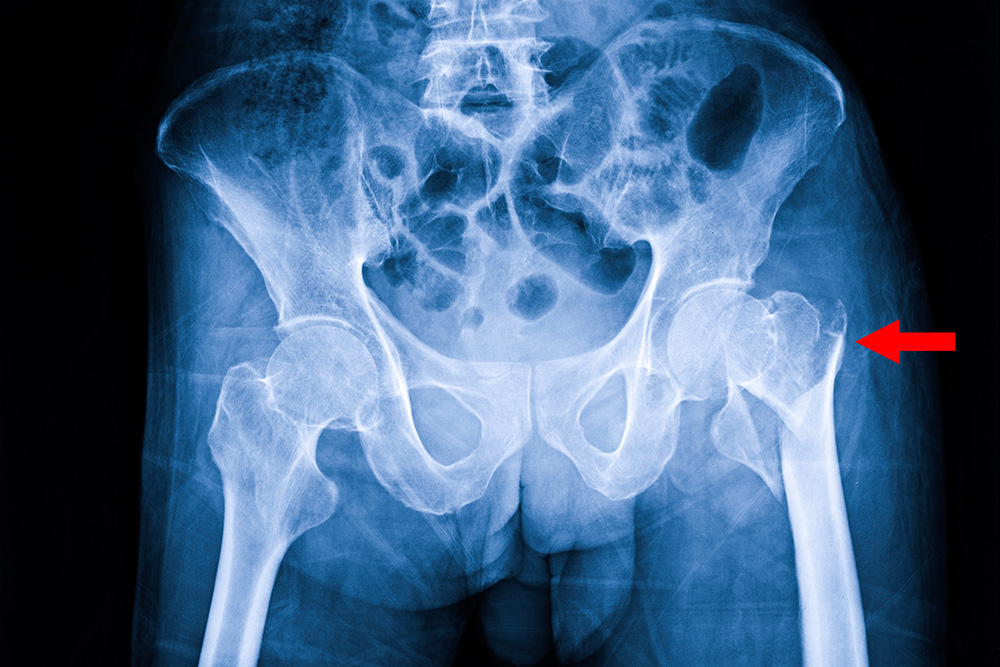
Symptoms of a Hip Fracture
Hip fractures usually present suddenly and require immediate medical attention. Common symptoms include:
- Severe pain in the hip or groin
- Inability to stand or bear weight
- Difficulty moving the leg
- Swelling or bruising around the hip
- A leg that appears shorter or turned outward
In most cases, patients are unable to walk after the injury, so it’s very important to seek treatment as soon as possible.
What causes a hip fracture?
The most common cause of a hip fracture is a fall, particularly in older adults. Other causes may include:
- Osteoporosis (weakened bones)
- High-impact trauma, such as a car accident
- Sports injuries or repetitive stress (less common)
- Conditions that affect balance or mobility
Because our bone density decreases with age, even minor falls can result in a fracture.
How are hip fractures diagnosed?
Diagnosis by our care team typically involves:
Physical Examination
A physical examination to assess pain and mobility.
X-Ray Imaging
Imaging studies such as X-rays to confirm the fracture.
MRI or CT Scan
MRI or CT scans if the fracture is not clearly visible on X-ray.
An accurate diagnosis helps guide the most appropriate treatment approach to help you recover as quickly as possible.
What are my options for hip fracture treatment?
Most hip fractures require surgery to repair or replace the damaged bone. Surgery is often performed within 24–48 hours to improve your outcomes and reduce complications. Common surgical options include:
Open Reduction and Internal Fixation (ORIF)
Surgical repair using screws, plates, or rods to stabilize the fractured bone.
Partial or Total Hip Replacement
Hip arthroplasty may be recommended when the fracture is severe or the joint is significantly damaged.
Tailored Surgical Approach
Procedures tailored to the type and location of the fracture and your overall health.
Rehabilitation and Recovery After Hip Fracture
Rehabilitation begins soon after surgery and is essential for restoring mobility and independence. Recovery may include:
Physical Therapy
To rebuild strength and flexibility.
Gait Training
To support safe walking and movement.
Return to Daily Activities
Gradual return to daily activities over several months.
Most patients begin moving within a day or two after surgery, with recovery continuing over several months.
Who is at risk for hip fractures?
Hip fractures are more common in:
- Adults over age 65
- Individuals with osteoporosis
- Patients with balance or mobility issues
- Those with a history of falls
Women tend to sustain hip fractures more often than men because of their higher rates of bone density loss.

Why Timely Treatment Matters
Without prompt treatment, hip fractures can lead to serious complications, including:
- Loss of mobility and independence
- Blood clots or infection
- Muscle weakness and deconditioning
Early surgical care and rehabilitation significantly improve outcomes and help you return to daily life more quickly.
When to Seek Immediate Care
A suspected hip fracture is a medical emergency. Seek immediate care if you or a loved one experiences:
- Severe hip pain after a fall
- Inability to stand or walk
- Visible deformity or leg shortening
Prompt treatment can make a significant difference in your recovery and long-term results.
Frequently Asked Questions
Is a hip fracture considered an emergency?
Yes. A hip fracture requires immediate medical attention and typically surgery. Delaying treatment can increase the risk of complications.
Do all hip fractures require surgery?
Most hip fractures require surgical repair or replacement to restore function and allow early mobility.
How long does it take to recover from a hip fracture?
Recovery usually takes several months, with gradual improvement over time. Many patients continue to regain strength and mobility for up to a year.
What is the most common cause of a hip fracture?
Falls are the leading cause of hip fractures, especially in older adults with weakened bones.
Can you walk after a hip fracture?
Most people are unable to walk immediately after a hip fracture because of the resulting pain and instability.
What happens if a hip fracture is not treated?
Without treatment, a hip fracture can lead to serious complications, including immobility, blood clots, and increased health risks.
Will I need physical therapy after a hip fracture?
Yes. Physical therapy is a key part of recovery and helps restore your strength, balance, and mobility after surgery.
Get Expert Care for Hip Fractures
Call us at 414-384-6700 to connect with our orthopedic specialists at Midwest Orthopedic and Musculoskeletal Alliance in Southeastern Wisconsin. We provide comprehensive evaluation, surgical expertise, and rehabilitation planning to help you recover safely and get you moving again.
Layton Avenue Ste 102 - Orthopedic Clinic
3033 W Layton Avenue, Suite 102
Greenfield, WI 53221
414-384-6700
Layton Avenue Ste 160 - Orthopedic Clinic
2500 W Layton Avenue, Suite 160
Milwaukee, WI 53221
414-384-6700
N. Mayfair Road - Orthopedic Clinic
3077 North Mayfair Road, Suite 100
Wauwatosa, WI 53222
414-384-6700
27th Street - Orthopedic Clinic
9969 S. 27th Street, Suite 1100
Franklin, WI 53132
414-384-6700
Rawson Avenue - Orthopedic Clinic
3111 W. Rawson Avenue, Suite 200/205
Franklin, WI 53132
414-384-6700
Rawson Avenue - Pain Management Clinic
3111 W Rawson Avenue, Suite 235
Franklin, WI 53132
414-260-5544
N Port Washington Road - Pain Management Clinic
12831 N Port Washington Road
Mequon, WI 53092
414-260-5544
Washington Avenue - Pain Management Clinic
10180 Washington Avenue
Mount Pleasant, WI 53177
414-260-5544
Rawson Avenue - SmartScan Medical Imaging Center
3111 W. Rawson Avenue, Suite 105
Franklin, WI 53132
855-694-3300
Ballpark Drive - OrthoLazer Center
7044 South Ballpark Drive, Suite 202
Franklin, WI 53132
414-448-7001
Bluemound Road - OrthoLazer Center
17550 West Bluemound Road
Brookfield, WI 53045
262-289-9455
MOSH Brookfield Walk-In Clinic
17000L W. Bluemound Rd.
Brookfield, WI 53005
414-817-6750
MOSH Franklin Ortho Walk-In Clinic
7095 S. Ballpark Dr. Suite 100
Franklin, WI 53132
414-817-6620