

Knee Replacement
When you choose Midwest Orthopedic and Musculoskeletal Alliance for joint replacement surgery, you have access to award-winning joint replacement surgeons using the latest technology and treatment options. In fact, our joint replacement specialists perform more knee, hip and shoulder replacements than nearly any other provider in Southeastern Wisconsin.
With us, you also benefit from our comprehensive approach – preparing you for surgery and guiding you all the way through recovery. If you’re interested in learning more about this procedure, find an orthopedic specialist and request an appointment online.
If your doctor suggests knee surgery as a treatment for your injury or arthritis of the knee, you may feel a little scared and unsure about what’s likely to happen to you. Relax. Getting the right information and knowing the options can help you approach your impending treatment in a calm, unstressed state of mind.
This section of our website provides key facts about knee replacement surgery and related issues for patients and their families.
By browsing the site, you will be able to gather information about:
- Various Knee Surgeries and Alternatives
- Knee Anatomy and Function
- Degenerative Changes Associated with Knee Arthritis
- What to Expect on Surgery Day
- Guidelines for Post-Operative Care and Rehabilitation
- Getting back to Life After Knee Replacement
The long-term goal of a knee replacement is to provide pain relief, restore normal activities of daily living, and enhance your quality of life.
Advanced Procedures for Faster, Better Recovery
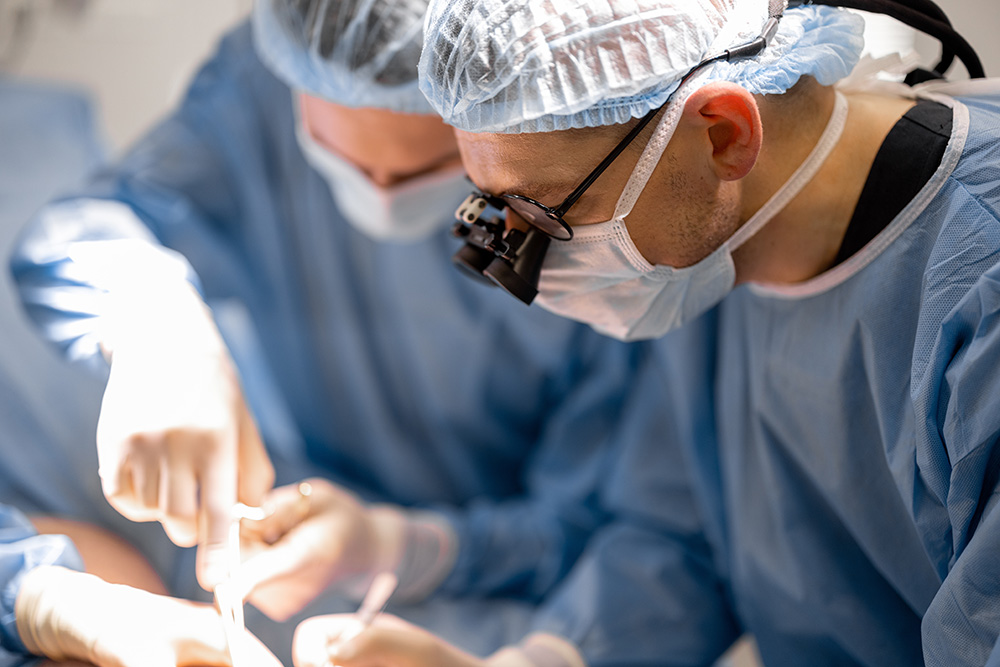
The majority of our joint replacement procedures are performed minimally invasively. Using tiny incisions and leading-edge technology, we can replace a joint with vastly shortened surgery times and less muscle involvement. This, along with improved longevity of the replacement joint, means shorter hospital stays, faster recoveries, improved range of motion and new joints that can be customized to your size, gender and activity level.
Is joint replacement surgery right for me?
If you suffer from the following symptoms, you may be a candidate for joint replacement surgery:
- Your everyday activities have been limited because of pain or stiffness in a joint
- Pain is constant and persistent, both day and night
- Anti-inflammatory drugs do not provide relief
- Other treatments no longer provide relief
Joint Replacement Options
Our board-certified joint replacement surgeons are specially trained and experienced in performing the following procedures:
Ankle
Ankle replacement
Elbow
Total elbow replacement
Shoulder
Total shoulder replacement
Knee
- Total knee replacement and knee revision
- Partial knee replacement (Hemi knee replacement)
- Minimally invasive knee replacement
Hip
- Total hip replacement and hip revision
- Anterior hip replacement
Robotic-Assisted Joint Replacement
Total and partial joint replacement with Mako® Robotics
Knee Surgery Overview
There are three major types of knee surgery: arthroscopic, partial knee replacement, and total knee replacement. Your doctor will advise you as to which surgery is right for your situation.
Knee Arthroscopy
In knee arthroscopy, a small camera is inserted into the knee joint through a small incision. The camera is attached to a video monitor so the doctor can see inside the knee.
Once the camera is in place, salt water is pumped into the knee joint. This expands the joint to make the surgery easier, and controls bleeding in the joint.
Once the surgeon has determined what injuries exist, he will make one to four new incisions for the surgical instruments. These may include a blunt hook for pulling on various tissues, a shaver to remove damaged or unwanted tissues such as torn cartilage, and a burr to remove bone.
After the surgery, the knee joint is drained, the incisions are closed, and a bandage or dressing is applied to the knee.
Arthroscopy may be used for a variety of knee joint conditions, including a torn meniscus, mild arthritis, loose pieces of broken cartilage in the joint, a torn or damaged anterior or posterior cruciate ligament, inflamed or damaged synovium or lining of the joint, or misalignment of the kneecap.
After the surgery, most people are able to go home the same day. Patients with no other problems, such as arthritis, can expect a full recovery within four to six weeks and with relatively little pain.
Partial Knee Replacement (Unicompartmental)
Partial knee replacement is a procedure that provides patients with a minimally invasive solution for arthritis of the knee. Partial knee replacement is used for cases of osteoarthritis where damage to one section or compartment of the knee is causing debilitating pain.
This procedure replaces only the damaged area of your knee joint, may require only one day of hospitalization, and results in dramatically less recovery time when compared with total knee replacement surgery.
Total Knee Replacement
In advanced cases of arthritis it may be necessary to replace the knee joint with an artificial joint in a procedure known as total knee replacement. This procedure normally takes between one and two hours and is the most comprehensive of the three surgical procedures available for treating arthritis of the knee.
This website contains general medical information and does not replace the medical advice of your physician. If you have questions about your medical condition or exercises, ask your doctor or health care provider.
Prepare for Orthopedic Surgery with Our Joint Effort Class
The best start to a recovery program is preparing for the surgery in advance. At Midwest Orthopedic and Musculoskeletal Alliance, our free Joint Effort class supports you before, during and after surgery through educational materials, one-on-one counseling and support.

Schedule Your Knee Replacement Consultation Today
If you are experiencing knee pain or have been told you may need knee replacement surgery, contact Midwest Orthopedic and Musculoskeletal Alliance today at 414-384-6700. Our orthopedic specialists in Southeastern Wisconsin will evaluate your condition and recommend the most appropriate treatment plan.
Layton Avenue Ste 102 - Orthopedic Clinic
3033 W Layton Avenue, Suite 102
Greenfield, WI 53221
414-384-6700
Layton Avenue Ste 160 - Orthopedic Clinic
2500 W Layton Avenue, Suite 160
Milwaukee, WI 53221
414-384-6700
N. Mayfair Road - Orthopedic Clinic
3077 North Mayfair Road, Suite 100
Wauwatosa, WI 53222
414-384-6700
27th Street - Orthopedic Clinic
9969 S. 27th Street, Suite 1100
Franklin, WI 53132
414-384-6700
Rawson Avenue - Orthopedic Clinic
3111 W. Rawson Avenue, Suite 200/205
Franklin, WI 53132
414-384-6700
Rawson Avenue - Pain Management Clinic
3111 W Rawson Avenue, Suite 235
Franklin, WI 53132
414-260-5544
N Port Washington Road - Pain Management Clinic
12831 N Port Washington Road
Mequon, WI 53092
414-260-5544
Washington Avenue - Pain Management Clinic
10180 Washington Avenue
Mount Pleasant, WI 53177
414-260-5544
Rawson Avenue - SmartScan Medical Imaging Center
3111 W. Rawson Avenue, Suite 105
Franklin, WI 53132
855-694-3300
Ballpark Drive - OrthoLazer Center
7044 South Ballpark Drive, Suite 202
Franklin, WI 53132
414-448-7001
Bluemound Road - OrthoLazer Center
17550 West Bluemound Road
Brookfield, WI 53045
262-289-9455
MOSH Brookfield Walk-In Clinic
17000L W. Bluemound Rd.
Brookfield, WI 53005
414-817-6750
MOSH Franklin Ortho Walk-In Clinic
7095 S. Ballpark Dr. Suite 100
Franklin, WI 53132
414-817-6620