

Anterior Cruciate Ligament (ACL) Injury
A sprained or torn ACL is a very common injury that can affect anyone. Athletes are more prone to these types of knee injuries as they are often engaging in activities that easily lead to an ACL tear or sprain.
Quick Links
Where is my ACL?
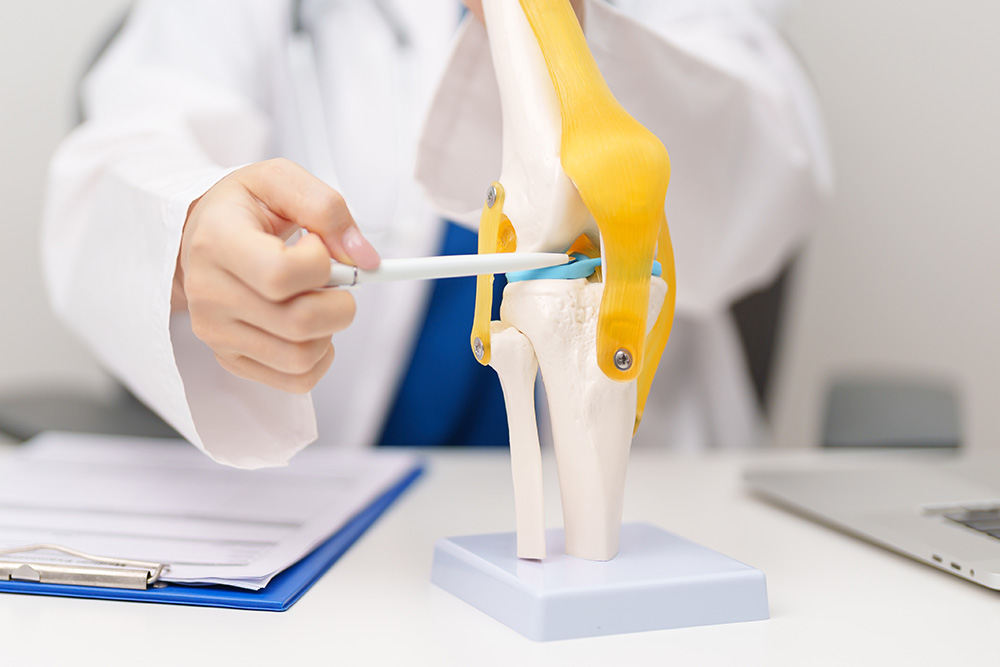
There are several different ligaments that make up the knee. The role of the cruciate ligaments is to control the back and forth motion of the knee. Cruciate ligaments are located inside of the knee joint, and they cross diagonally across the knee.
The anterior cruciate ligament can be found in the middle of the knee running diagonally to the posterior cruciate ligament at the back of the knee. The purpose of the ACL is to provide stability to the entire knee joint, with a particular importance regarding the tibia and keeping it in place.
ACL Sprains and Tears
There is a gradual scale that exists to measure the severity of injury to the anterior cruciate ligament. This scale consists of:
Grade 1 ACL Sprain
The ACL has been overstretched but is still able to maintain stability of the knee joint.
Grade 2 ACL Sprain
The ACL becomes loose from the amount of strain it has endured. Often, this particular grade of an ACL sprain is also known as a partial tear.
Grade 3 ACL Sprain
The worst-case scenario wherein the ACL has been torn completely and split into two separate pieces, leaving the joint unstable. A complete tear is the most common ACL injury.
Although grade 1 and 2 sprains can occur, a grade 3 sprain or complete tear of the ACL is the most common injury sustained by the anterior cruciate ligament.
What can lead to an ACL injury?
Athletes are more likely to injure their ACL due to the nature of their sport. Female athletes are particularly susceptible, believed to be linked to differences in muscular and skeletal systems.
Most ACL injuries occur from:
- Sudden change of direction (cutting)
- Abrupt stops
- Improper landing from a jump
- A collision
- Slowing from a run
Symptoms of an ACL Injury
Many people who experience an injury to their ACL will hear a “pop” or feel their knee give out, making the ACL injury quite noticeable. Typically, pain will quickly follow such sounds or sensations, and the joint will begin to swell.
In the case of a minor ACL injury, or grade 1 sprain, avoiding use of the knee joint with proper rest and relaxation may be enough to repair the damage. Unfortunately, many patients do not give their bodies enough time to heal before returning to sports or regular activities.
More serious injuries such as a partial or complete tear of the anterior cruciate ligament are usually accompanied by worsening pain, loss of range of motion within the joint, tenderness of the area affected, and discomfort during use of the ACL.
Schedule Your ACL Injury Consultation
It is important to address an ACL injury right away with the help of a professional. Contact Midwest Orthopedic and Musculoskeletal Alliance today at 414-384-6700 to request an appointment with one of our orthopedic specialists in Southeastern Wisconsin.
Layton Avenue Ste 102 - Orthopedic Clinic
3033 W Layton Avenue, Suite 102
Greenfield, WI 53221
414-384-6700
Layton Avenue Ste 160 - Orthopedic Clinic
2500 W Layton Avenue, Suite 160
Milwaukee, WI 53221
414-384-6700
N. Mayfair Road - Orthopedic Clinic
3077 North Mayfair Road, Suite 100
Wauwatosa, WI 53222
414-384-6700
27th Street - Orthopedic Clinic
9969 S. 27th Street, Suite 1100
Franklin, WI 53132
414-384-6700
Rawson Avenue - Orthopedic Clinic
3111 W. Rawson Avenue, Suite 200/205
Franklin, WI 53132
414-384-6700
Rawson Avenue - Pain Management Clinic
3111 W Rawson Avenue, Suite 235
Franklin, WI 53132
414-260-5544
N Port Washington Road - Pain Management Clinic
12831 N Port Washington Road
Mequon, WI 53092
414-260-5544
Washington Avenue - Pain Management Clinic
10180 Washington Avenue
Mount Pleasant, WI 53177
414-260-5544
Rawson Avenue - SmartScan Medical Imaging Center
3111 W. Rawson Avenue, Suite 105
Franklin, WI 53132
855-694-3300
Ballpark Drive - OrthoLazer Center
7044 South Ballpark Drive, Suite 202
Franklin, WI 53132
414-448-7001
Bluemound Road - OrthoLazer Center
17550 West Bluemound Road
Brookfield, WI 53045
262-289-9455
MOSH Brookfield Walk-In Clinic
17000L W. Bluemound Rd.
Brookfield, WI 53005
414-817-6750
MOSH Franklin Ortho Walk-In Clinic
7095 S. Ballpark Dr. Suite 100
Franklin, WI 53132
414-817-6620