

Rotator Cuff Tear
A torn rotator cuff is a fairly common injury, as well as a painful one. These tears can occur as either a partial, or total tear, which may or may not require surgical treatment depending upon the severity of the individual case.
Quick Links
Basic Shoulder Anatomy
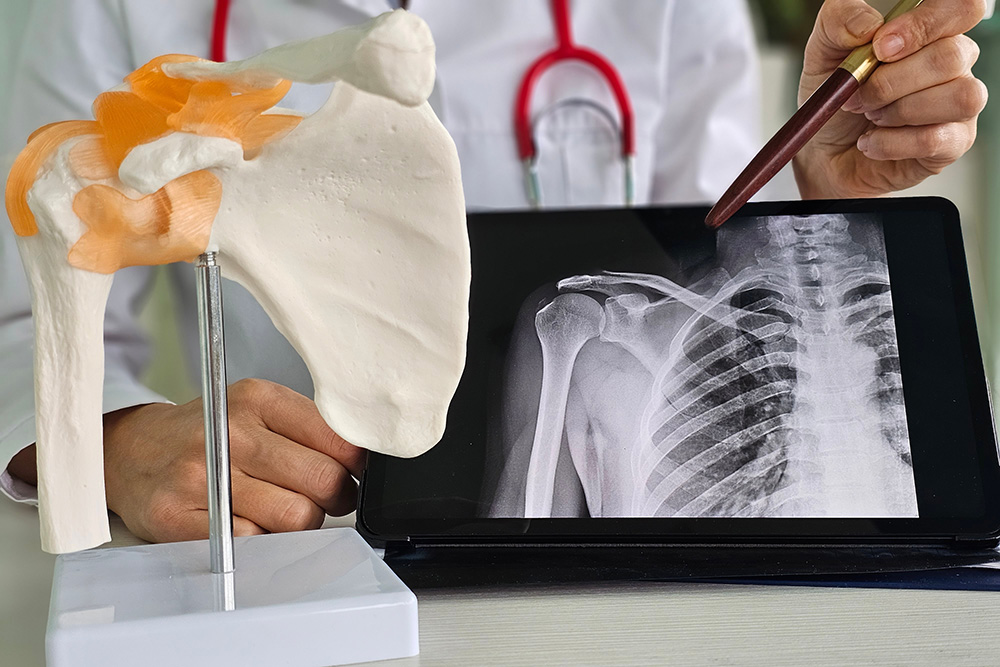
The rotator cuff itself is made up of four muscles that together form a single cuff of tendon that connects to the head of the humerus. This cuff is what allows the shoulder to move around in all directions.
Much of the movement that our arms make is determined by the rotator cuff, which is why injuries to this area can be particularly painful. Even a task as simple as lifting your arm above your head would be impossible with a torn rotator cuff.
Potential Causes of a Rotator Cuff Tear
Most often, a torn rotator cuff occurs from:
- Repetitive motions
- Multiple injuries to the rotator cuff
- Heavy lifting
- Falling onto the arm or shoulder
- Athletic activities, especially those involving lots of shoulder movement like tennis or baseball
- Shoulder impingement
Symptoms of a Torn Rotator Cuff
Some people that suffer a rotator cuff tear will not experience any pain, but this is not often the case. Typically, individuals will notice symptoms that gradually worsen over the course of a few days or weeks.
At first, the pain will likely radiate from the front of the shoulder before spreading down the arm. This pain will become more intense when the arm is lifted or lowered and may even begin to disrupt your sleep.
In cases of more severe injury, the pain will be immediate and it will be instantly difficult to move the shoulder joint in any way as there is no longer anything holding the shoulder muscles to the bone.
Diagnosis of a Shoulder Injury
Because shoulder injuries may vary on a case-by-case basis, your provider will need to perform an X-ray, ultrasound, MRI, or a combination of these imaging tests in order to determine the full extent of damage that has been done to the rotator cuff.
Treatment Options
Not all rotator cuff tears will require surgery. Adequate rest, physical therapy, and pain medications may be enough for some tears to heal on their own, but if the injury does not improve over a significant period of time then surgery is likely the best option.
Discussions regarding surgery for a rotator cuff repair will need to be individualized for the exact patient and their exact injury. Recent achievements in the healthcare industry have allowed surgical procedures to become incredibly advanced, leading to less recovery time for patients.

Schedule Your Rotator Cuff Consultation
To speak with a specialist about your rotator cuff injury or ways to prevent future damage to your shoulders, contact Midwest Orthopedic and Musculoskeletal Alliance today at 414-384-6700. Our team in Southeastern Wisconsin is ready to help.
Layton Avenue Ste 102 - Orthopedic Clinic
3033 W Layton Avenue, Suite 102
Greenfield, WI 53221
414-384-6700
Layton Avenue Ste 160 - Orthopedic Clinic
2500 W Layton Avenue, Suite 160
Milwaukee, WI 53221
414-384-6700
N. Mayfair Road - Orthopedic Clinic
3077 North Mayfair Road, Suite 100
Wauwatosa, WI 53222
414-384-6700
27th Street - Orthopedic Clinic
9969 S. 27th Street, Suite 1100
Franklin, WI 53132
414-384-6700
Rawson Avenue - Orthopedic Clinic
3111 W. Rawson Avenue, Suite 200/205
Franklin, WI 53132
414-384-6700
Rawson Avenue - Pain Management Clinic
3111 W Rawson Avenue, Suite 235
Franklin, WI 53132
414-260-5544
N Port Washington Road - Pain Management Clinic
12831 N Port Washington Road
Mequon, WI 53092
414-260-5544
Washington Avenue - Pain Management Clinic
10180 Washington Avenue
Mount Pleasant, WI 53177
414-260-5544
Rawson Avenue - SmartScan Medical Imaging Center
3111 W. Rawson Avenue, Suite 105
Franklin, WI 53132
855-694-3300
Ballpark Drive - OrthoLazer Center
7044 South Ballpark Drive, Suite 202
Franklin, WI 53132
414-448-7001
Bluemound Road - OrthoLazer Center
17550 West Bluemound Road
Brookfield, WI 53045
262-289-9455
MOSH Brookfield Walk-In Clinic
17000L W. Bluemound Rd.
Brookfield, WI 53005
414-817-6750
MOSH Franklin Ortho Walk-In Clinic
7095 S. Ballpark Dr. Suite 100
Franklin, WI 53132
414-817-6620